Restaurant Equipment Financing Payment Terms Explained

Last Updated: October 25, 2026
Quick Summary
Restaurant equipment financing payment terms set how much you pay each period, for how long, and at what cost, built from the amount financed, the APR, the repayment term, and any fees rolled into the loan. Terms typically run 12 to 72 months, and the lowest monthly payment is rarely the cheapest deal because longer terms add interest.
- Restaurant equipment loan terms typically run 12 to 72 months, with fixed-rate financing the norm under roughly $150,000.
- Match the repayment term to the equipment's useful life so you are not paying for a failing asset.
- Compare total repayment across 12, 24, and 60-month terms, never just the monthly payment.
- A balloon payment keeps payments low by pushing a large lump sum to the end of the term.
- Ask every lender whether there is a prepayment penalty and whether you can pay down the balance early without a fee.
Table of Contents
- How Restaurant Equipment Financing Payment Terms Work
- Restaurant Equipment Loan Terms: Rates, Lengths, and Monthly Payments
- Restaurant Equipment Lease vs Loan: Which Fits Your Cash Flow
- Using a Restaurant Equipment Loan Payment Calculator
- Restaurant Equipment Financing With No Money Down
- Contract Clauses That Change Your Effective Payment Terms
- Seasonal Cash-Flow Planning for Restaurant Equipment Payments
- Get Pre-Qualified for Restaurant Equipment Financing
- Frequently Asked Questions
How Restaurant Equipment Financing Payment Terms Work
Restaurant equipment financing payment terms are the contractual rules that set how much you pay each period, for how long, and at what cost.
At MEDITERRANEAN RESTAURANT EQUIPMENT, we walk owners through this math daily. A new range, a walk-in cooler, or a full kitchen package all come down to the same question: what can the kitchen support each week?
Here is the part most buyers miss. The lowest monthly payment is rarely the cheapest deal.
Restaurant Equipment Loan Terms: Rates, Lengths, and Monthly Payments
Restaurant equipment loan terms typically run 12 to 72 months, with fixed-rate financing being the norm for amounts under roughly $150,000. Shorter terms carry higher monthly payments but less total interest. Longer terms ease cash flow but raise the total repayment.
Interest rates depend on your credit profile, business history, and equipment type. A well-qualified borrower with strong business credit usually lands a lower APR than a newer operator.
Three structural choices drive your monthly payment:
- Term length: 12-month, 24-month, 60-month, and 72-month terms are common in commercial kitchen financing.
- Payment frequency: monthly, weekly, or seasonal schedules.
- Down payment: from no money down to a substantial down payment that lowers the loan balance.
Matching Term Length to Equipment Useful Life
The cleanest rule in equipment finance: match the repayment term to how long the equipment stays productive. A fryer that works hard for eight years should not be financed over 72 months if you plan to replace it in five.
When the term outlasts the equipment, you keep paying for an asset that is already failing. When the term is much shorter than the useful life, you build equity fast but strain working capital.
Total Cost Examples Across 12, 24, and 60-Month Terms
Because pricing depends on the lender and your credit, we will not quote rates. Instead, here is the framework to compare total repayment on any quote you receive.
| Term | Monthly Payment | Total Repayment | Best For |
|---|---|---|---|
| 12-month | Highest | Lowest | Strong cash flow, fast payoff |
| 24-month | Moderate | Moderate | Balanced cost and cash flow |
| 60-month | Lowest | Highest | Tight budgets, long-life equipment |
Run your own numbers: take the amount financed, apply the quoted APR, and compare total repayment across terms, not just the monthly figure. That single comparison exposes how much the longer term actually costs.
Restaurant Equipment Lease vs Loan: Which Fits Your Cash Flow
The restaurant equipment lease vs loan decision comes down to ownership.
Loans suit equipment you intend to keep for its full life. Leases suit fast-changing gear or operators who want payment flexibility and predictable rental payments without tying up working capital.
Watch out: a lease with a fair-market-value buyout can cost far more than expected if you decide to keep the equipment. Read the lease-end options before signing.
Using a Restaurant Equipment Loan Payment Calculator
A restaurant equipment loan payment calculator turns three inputs into a payment: amount financed, APR, and term. Enter the equipment price minus your down payment, add the quoted rate, choose a term, and the calculator returns the monthly payment and total repayment.
Use it to pressure-test a quote before you commit. Plug in 24, 36, and 60-month terms on the same amount and compare total repayment.
- Confirm whether the rate is APR or a flat add-on rate.
- Check that fees are included, not hidden.
- Compare total repayment, never just the payment.
Restaurant Equipment Financing With No Money Down
Restaurant equipment financing with no money down exists, but it usually costs more.
If you qualify, the trade-off is straightforward: you preserve working capital and cash flow now, and you pay more in total financing cost over the life of the loan.
Ask every lender two questions: is there a prepayment penalty, and can I pay down the loan balance early without a fee?
Contract Clauses That Change Your Effective Payment Terms
The payment printed on the quote is the payment only if every clause in the contract behaves the way you assumed. Several standard clauses quietly change what you actually owe, and they are where restaurant equipment deals go sideways. Here is what each one does, how it hits your cash flow, and what to ask before you sign.
Prepayment penalty
A prepayment penalty charges you a fee, often a percentage of the remaining balance or a set number of months of interest, if you pay the loan off early. It exists because the lender priced the loan assuming it would collect interest for the full term. If your contract has one, paying off early to save interest can cost more than it saves.
Balloon payment
A balloon keeps the monthly payment artificially low by pushing a large lump sum to the end of the term (What is a balloon payment? When is one allowed?). A $40,000 loan structured with a balloon might show a payment that looks like a 60-month loan but actually amortizes over 84 months, with the unpaid balance due at month 60.
Step payments
Step payments start low and rise on a schedule, for example, 6% lower in year one, then stepping up. They can help a new location through its ramp-up, but they create a payment spike you have to plan for. Map the step schedule against your cash-flow forecast before signing, and confirm the size and timing of each increase.
Deferred payment
A deferred-payment clause gives you a grace period at the start, often 30 to 90 days, before the first payment is due. It sounds like free money, but interest usually accrues during the deferral and gets added to the balance, so the loan is larger when payments begin. Ask whether interest accrues during the deferral and whether the term is extended or the payment is raised to catch up.
Personal guarantee
A personal guarantee means your personal assets back the business loan if the business defaults. It is standard for newer businesses and smaller loans, and it does not change the monthly payment, but it changes your risk. If you cannot avoid it, ask whether it can be limited to a specific dollar amount or a specific period, and whether it can be removed after a set number of on-time payments.
Automatic renewal
Common in leases, an automatic renewal clause renews the lease at the end of the term unless you give written notice within a window, often 60 to 90 days before expiration. Miss the window and you are locked into another term, sometimes at a higher rate. Put the notice deadline on your calendar the day you sign.
End-of-term buyout and residual
On a lease, the buyout clause sets what you pay to own the equipment at the end. A $1 buyout is effectively a loan in lease clothing. A fair-market-value buyout means you pay whatever the equipment is worth at the end, which can be far more than you expect if the market shifts. Ask for the buyout formula and a realistic residual estimate before you sign.
Questions to negotiate with
- Can the prepayment penalty be waived or capped?
- Is the balloon due at a date I can plan for, or can it be amortized instead?
- Can the personal guarantee be limited or removed after a set number of on-time payments?
Bring these questions to every lender you talk to. The answers, not the quoted payment, are what tell you which deal is actually cheaper.
Seasonal Cash-Flow Planning for Restaurant Equipment Payments
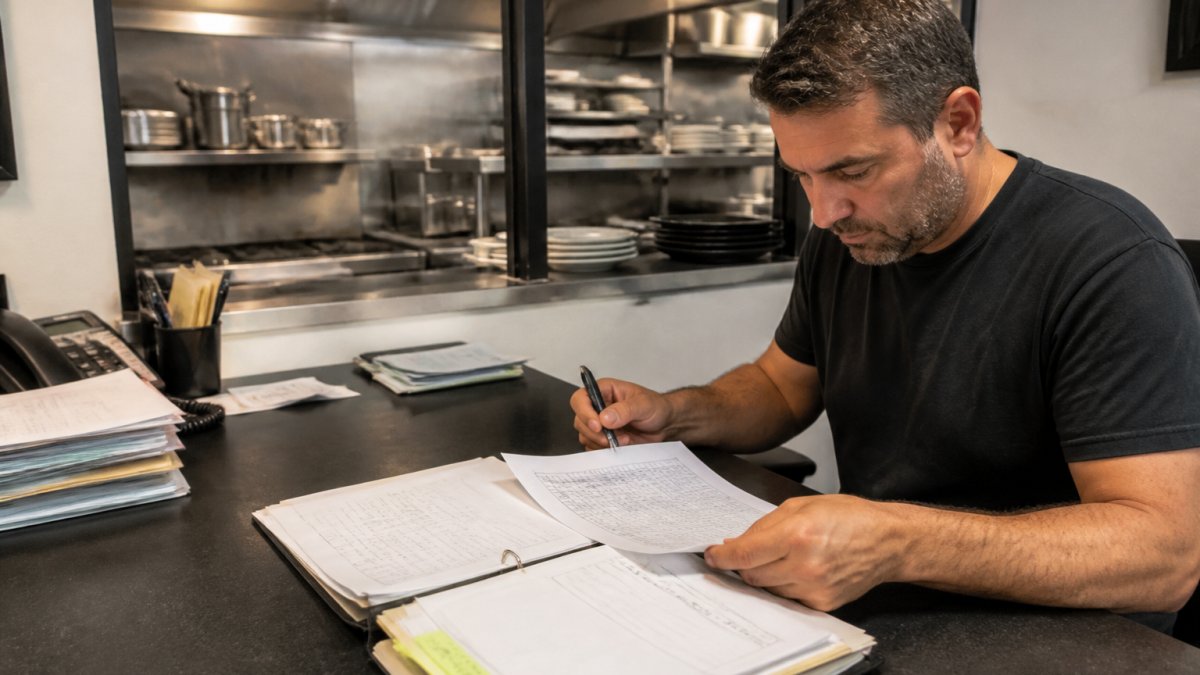
Restaurants do not earn evenly, so fixed payments can collide with slow months. Seasonal payment structures let you pay more in peak season and less in the off months, matching repayment to revenue.
Ask lenders about weekly payment options, seasonal schedules, and deferred payment at the start of a slow stretch.
Get Pre-Qualified for Restaurant Equipment Financing
Pre-qualification tells you your likely terms before you commit to equipment. Gather your business credit profile, financials, and time in business, then ask lenders for a pre-qualification with the APR, term options, and any fees disclosed.
This is where we help. MEDITERRANEAN RESTAURANT EQUIPMENT offers flexible financing options on our new and used commercial kitchen equipment, plus bulk order pricing and an equipment buy-back program that turns your old gear into credit toward the new.
Frequently Asked Questions
What payment terms are common for restaurant equipment financing?
Most restaurant equipment financing uses terms from 12 to 72 months, with 24- and 60-month terms being the most common. Shorter terms carry higher monthly payments but less total interest. Longer terms lower the monthly payment but increase total financing cost. Some lenders offer seasonal or deferred payment structures for restaurants with uneven revenue. Ask each lender for the APR, not just the monthly payment, so you can compare offers accurately.
Is leasing restaurant equipment cheaper than financing it?
Leasing often has lower monthly payments and may require less money down, but you do not own the equipment at the end unless you exercise a buyout option. Financing builds ownership with each payment. Leasing can make sense for equipment you plan to upgrade every few years, such as POS systems or specialty cooking gear. For long-life assets like ranges, refrigerators, and dish machines, a loan usually costs less over the full ownership period.
Can a restaurant finance equipment with no money down?
Yes. Many lenders offer restaurant equipment financing with no money down, especially for established businesses with strong credit profiles and a few years of operating history. No-money-down offers usually come with higher APRs or stricter approval requirements than deals with a down payment. Startup restaurants may need a personal guarantee or a larger down payment to qualify. Always compare the total repayment amount, not just the upfront cost.
How do restaurant equipment loan payments work?
A restaurant equipment loan payment is typically a fixed amount due monthly, covering principal and interest. Some lenders offer weekly or seasonal payment schedules. The payment is set by the loan amount, APR, and repayment term. A restaurant equipment loan payment calculator can show how different term lengths change the monthly figure. Before signing, confirm whether the payment includes fees, taxes, and delivery charges or whether those are billed separately.
What fees should I look for in an equipment financing agreement?
Read the contract for origination fees, documentation fees, late payment penalties, prepayment penalties, and end-of-lease charges such as return shipping or excessive wear fees. A prepayment penalty can erase the savings of paying off early. Some leases also include a residual value or buyout price that you must pay to own the equipment. Ask for the full fee schedule in writing before you sign, and compare the APR across lenders rather than the monthly payment alone.
What happens if I pay off restaurant equipment financing early?
Early payoff can save you the remaining interest, but only if your contract has no prepayment penalty. Some lenders charge a fee equal to a percentage of the remaining balance or a set number of payments. Leases may have early termination clauses that require the remaining payments plus fees. Check the prepayment terms before signing. If you expect seasonal windfalls or plan to refinance, a contract without a prepayment penalty is worth prioritizing.
Ready to equip your kitchen without straining cash flow? Get pre-qualified with MEDITERRANEAN RESTAURANT EQUIPMENT and compare flexible financing options, bulk pricing, and buy-back credit in one visit. Get started with MEDITERRANEAN RESTAURANT EQUIPMENT and build a payment plan that fits your season, your equipment, and your budget.
