Commercial Food Service Equipment: New vs Used Buying Guide

Quick Summary
Commercial food service equipment is any appliance or unit built to run for hours at high volume in a professional kitchen, such as ranges, griddles, refrigeration and dishwashing gear. Unlike consumer-grade appliances designed for a few meals a day, these units handle constant use, heavier loads and frequent cleaning.
- Size refrigeration by estimating daily ingredient volume and delivery schedule, adding a two- to three-day supply buffer.
- Compare energy use estimates, not just purchase price, since efficient units can recover their higher cost through lower bills.
- Confirm gas line, electrical voltage and phase, hood capacity and water supply before ordering equipment that depends on them.
- Match cooking capacity to peak demand, not average demand, by counting your busiest hour or shift.
- Track total cost of ownership, including installation, energy, maintenance and downtime, when comparing models.
Table of Contents
- What Counts as Commercial Food Service Equipment
- Cooking Equipment: Ranges, Griddles, and Their Trade-offs
- Refrigeration Commercial Units: Sizing, Energy Use, and Lifecycle Cost
- Buying Criteria: Choosing Equipment by Operation, Capacity, and Installation Needs
- New vs Used Commercial Equipment and How to Finance It
- Commercial Cooking Equipment Maintenance and Total Cost of Ownership
- Planning Your Next Equipment Purchase Across the NY/NJ Area
- Frequently Asked Questions
What Counts as Commercial Food Service Equipment
Last Updated: November 19, 2026
Commercial food service equipment is any appliance or unit built to run for hours at high volume in a professional kitchen. Restaurants, diners, pizzerias, bakeries and caterers all depend on it. Consumer-grade appliances are designed for a few meals a day, while commercial units are built to handle constant use, heavier loads and frequent cleaning.
Most operators compare the same core categories: cooking equipment, refrigeration, food preparation, dishwashing and food holding. Each one carries a different buying decision, so it helps to know what you are actually choosing between before you compare prices.
Most of the equipment in this guide falls into two groups. Cooking units such as ranges and griddles generate heat for the line. Refrigeration units hold ingredients at safe temperatures between deliveries and prep. Decisions about either group come down to capacity, installation and how the unit will fit into your daily workflow.
Cooking Equipment: Ranges, Griddles, and Their Trade-offs
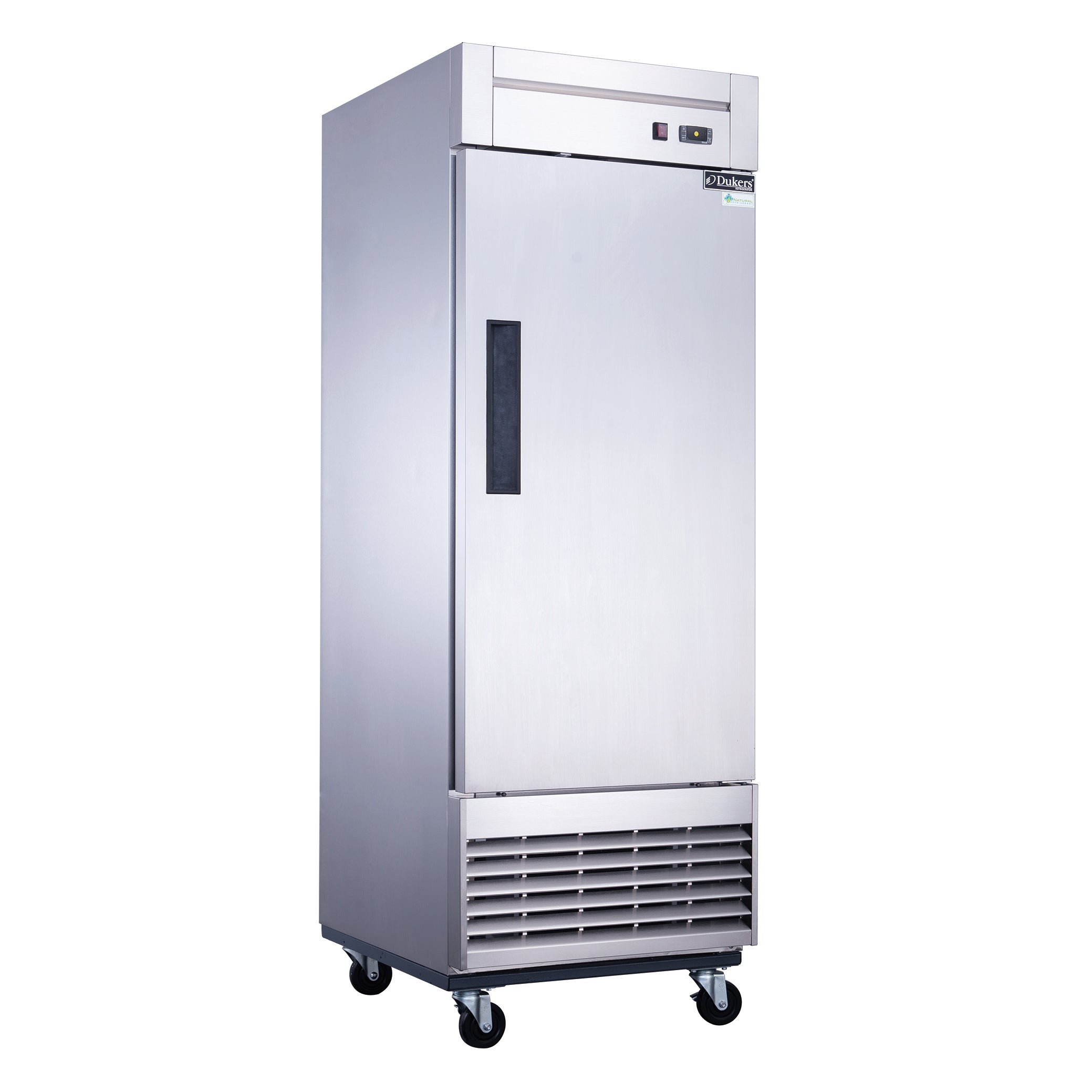
Cooking equipment is usually the largest single purchase in a new kitchen. Ranges and griddles look similar on a spec sheet, but they serve different menus. A griddle gives you a wide, flat cooking surface for eggs, burgers and pancakes. A range gives you open burners for pots and pans, plus an oven for baking and roasting.
Gas Griddles Compared: Countertop vs Floor-Standing Capacity
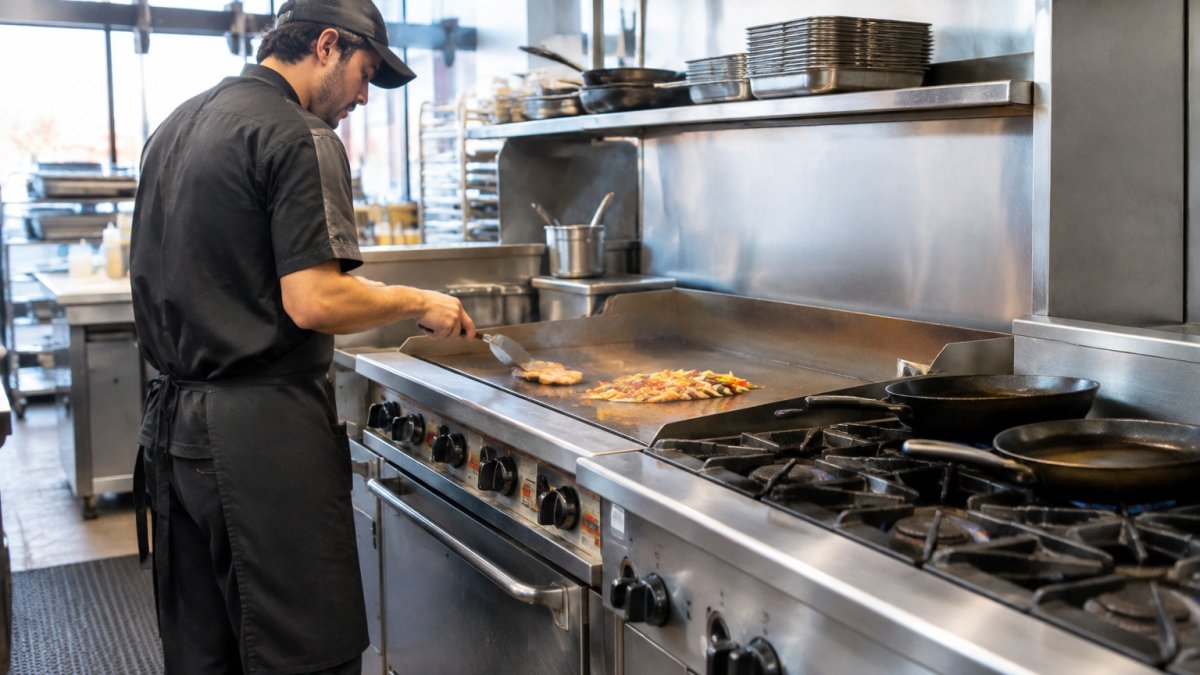
Countertop griddles save floor space and suit smaller prep areas. Floor-standing units give you more cooking surface and usually more burners. The Vulcan MSA60-30 is a 60-inch countertop griddle with five cooking zones and a 6-quart front grease trough, priced at $16,478.00. Its 135,000 BTU output and 30-inch cooking depth are listed in its specifications.
For smaller operations, the Winco NGGD-24M offers two 30,000 BTU burners in a 24-inch footprint at $948.00. The Winco NGGD-36M adds a third burner and more width for $1,255.00. Both use manual knobs with independent zone control.
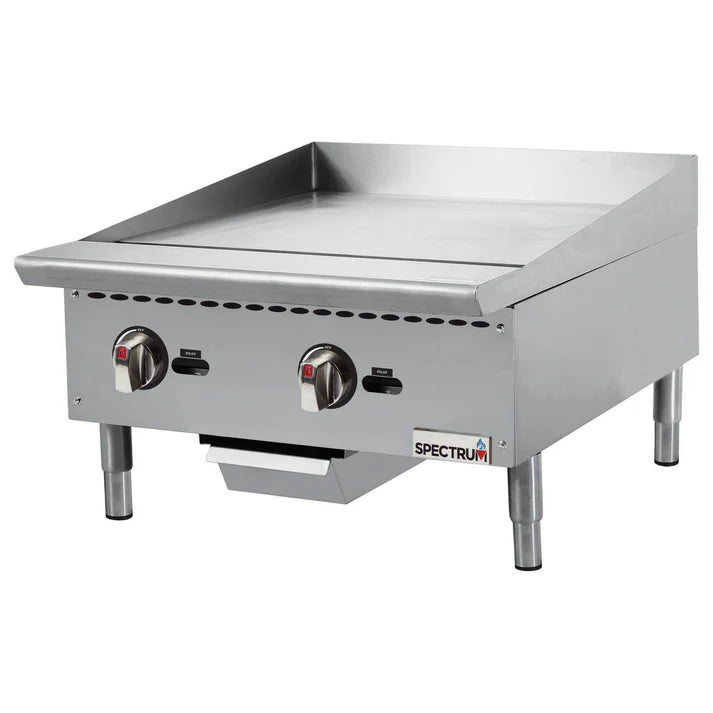
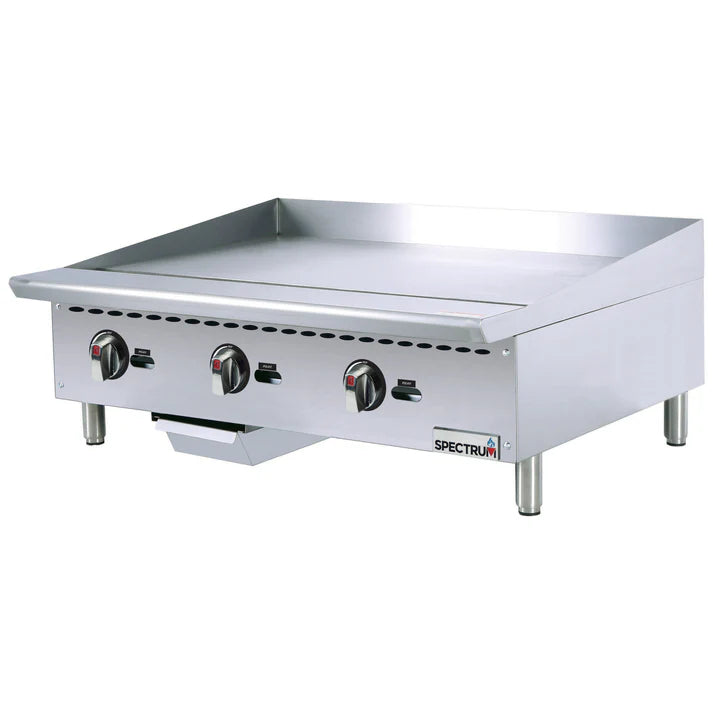
Pros of countertop griddles: lower cost, smaller footprint, easy to fit into an existing line. Cons of countertop griddles: limited cooking area, less room for large batches.
Floor-standing griddles and their larger cousins add cooking space and storage underneath. Choose them when your menu depends on high-volume griddle items all shift.
Electric Ranges: Oven Size, Burner Count, and Electrical Requirements
The Imperial Range IR-6-E is a 36-inch electric range with six 9.5-inch cooking plates and a standard oven that fits full-size 18 x 26-inch sheet pans, priced at $5,560.00. It runs on 208v or 240v single phase or three phase, chosen at checkout.
The Imperial Range IR-10-E steps up to 60 inches with ten round elements and two standard ovens, at $15,401.00. It requires 208v three-phase power, so confirm your electrical service before ordering.
When comparing electric ranges, check three things: oven interior size, burner count against your menu, and the electrical service your building provides. A range that needs three-phase power in a single-phase building can add wiring costs.
The article compares the griddle and range models it names, so the key specs can be scanned side by side.
| Model | Type and size | Price |
|---|---|---|
| Vulcan MSA60-30 | 60-inch countertop gas griddle, five zones | $16,478.00 |
| Winco NGGD-24M | 24-inch gas griddle, two 30,000 BTU burners | $948.00 |
| Winco NGGD-36M | 36-inch gas griddle, three burners | $1,255.00 |
| Imperial Range IR-6-E | 36-inch electric range, six plates | $5,560.00 |
| Imperial Range IR-10-E | 60-inch electric range, ten elements | $15,401.00 |
Price
Refrigeration Commercial Units: Sizing, Energy Use, and Lifecycle Cost
Estimate your daily ingredient volume and your delivery schedule before choosing a refrigeration size.
Sizing starts with a simple volume estimate. Track how many cases or pans of each ingredient you go through in a day, multiply by your delivery interval, and add a buffer for peak periods. Most operators find that a two- to three-day supply buffer covers normal variability without overbuilding. For walk-ins, measure the largest sheet pans and storage racks you plan to roll in, then add clearance for airflow.
Energy use is the silent cost driver. A cheaper unit with poor insulation or an inefficient compressor can cost more across its service life than a higher-priced model. Ask for the energy rating and expected maintenance intervals before you buy. Compare annual energy use estimates rather than just purchase price. A common pattern is that a higher-efficiency reach-in costs more upfront but recovers the difference through lower electricity bills over several years.
Pair the unit size with your storage plan rather than buying for peak capacity alone.
Buying Criteria: Choosing Equipment by Operation, Capacity, and Installation Needs
Use this checklist before you compare models:
- Menu items: which cooking methods do you use most?
- Daily volume: how many covers or units per shift?
- Space: measured width, depth and height, plus clearance for ventilation
- Utilities: gas or electric, voltage, phase and BTU or kW requirements
- Installation: who handles hookups, and does the building need permits?
- Service: what warranty and parts support does the supplier provide?
Beyond the checklist, the buying decision changes by operation type. A café with a limited menu and low covers per hour can often run on countertop equipment and a single reach-in. A school kitchen serving hundreds of meals in a tight window needs high-throughput ovens, large-batch kettles, and refrigeration sized for bulk deliveries. A high-volume restaurant with a broad menu typically needs a full cooking line with multiple heat sources, dedicated prep refrigeration, and a dishwashing setup that keeps pace with peak turns. Matching equipment to operation type prevents both overbuying and mid-shift bottlenecks.
Capacity planning should start from peak demand, not average demand. Count your busiest hour or shift, then choose equipment that can handle that load without running at maximum continuously. For cooking equipment, that means checking BTU output or burner count against the number of items you need to produce per hour. For refrigeration, it means sizing storage for your delivery cycle plus a buffer. For dishwashing, it means matching racks per hour to your peak dish volume.
Installation and utility work often add a meaningful share of total project cost. Budget for it early so it does not catch you off guard. Confirm your building's gas line size, electrical service voltage and phase, ventilation hood capacity, and water supply before ordering equipment that depends on them. A range that needs three-phase power in a single-phase building can add significant wiring costs, and a hood that cannot handle the BTU load of a new cooking line may require an upgrade.
Total cost of ownership should guide the final comparison. Two units with similar purchase prices can have very different costs once you factor in energy use, water consumption, maintenance intervals, and expected service life. Ask for energy and water ratings where available, and compare annual operating estimates rather than sticker price alone. A common pattern is that the lowest-purchase-price unit is not the lowest-cost unit over five years.
Many operators find that installation and utility work adds a meaningful share of total project cost. Budget for it early so it does not catch you off guard.
New vs Used Commercial Equipment and How to Finance It
New equipment carries a full warranty and the latest efficiency standards. Used equipment costs less upfront and can perform well for years if it was well maintained. The right choice depends on your budget, how hard the unit will work and how much downtime you can absorb.
Financing gives many operators a way to spread the cost. Flexible financing options are available for kitchen equipment purchases, and bulk ordering is available. Ask about terms, total repayment amount and any early-payoff rules before signing.
Our equipment buy-back program is available for operators replacing existing equipment.
Commercial Cooking Equipment Maintenance and Total Cost of Ownership
Total cost of ownership includes purchase price, installation, energy use, cleaning supplies, repairs and downtime. Two identical griddles can have very different costs if one is cleaned daily and the other is neglected.
A simple maintenance schedule helps. Clean grease troughs and splash guards after each shift. Inspect gas connections and burner flames monthly. Schedule a professional service visit at least once a year for refrigeration and cooking units.
Planning Your Next Equipment Purchase Across the NY/NJ Area
Start by listing your must-have equipment, then rank each item by how often it runs. Measure your space carefully and confirm utility capacity with your building manager. Compare new and used options for each category, and factor in financing and buy-back value.
Mediterranean Restaurant Equipment serves restaurant and diner owners, caterers and new operators in the New York and New Jersey area. Visit our Union location or our Burlington showroom to see equipment in person and talk through layout and sizing with our team.
Commercial kitchens succeed when the equipment matches the menu, the space and the budget. Visit Mediterranean Restaurant Equipment to compare new and used options, explore financing, and plan your next build with people who know commercial kitchens.
Frequently Asked Questions
What is considered commercial food service equipment?
Commercial food service equipment is the gear a restaurant, caterer, or institutional kitchen uses to cook, hold, refrigerate, wash, and prepare food at volume. It includes cooking equipment such as ranges, griddles, and ovens, along with refrigeration, dishwashing and sanitation units, and food preparation tools. Commercial units are built with heavier stainless steel construction and higher output than residential appliances, so they can handle daily service without frequent breakdowns.
How do I choose the right commercial kitchen equipment for my restaurant?
Start with your menu and daily volume, then match each piece of equipment to the tasks it must perform. Measure your space and confirm utility requirements, including gas line size and electrical service such as 208V or 240V single phase versus three phase, before ordering. For example, the Imperial Range IR-10-E offers 10 burners and two standard ovens in a 60-inch footprint, while a Winco NGGD-24M 24-inch gas griddle suits a smaller line. Compare capacity, footprint, and energy use together rather than price alone.
Is it better to buy new or used commercial restaurant equipment?
New equipment carries a full manufacturer warranty and the latest efficiency features, while used or refurbished equipment usually costs less upfront and can be a sound choice for proven, simple units like griddles and ranges. Inspect used gear for burner condition, thermostat accuracy, and gasket wear, and ask whether it has been tested under power. Mediterranean Restaurant Equipment offers both new and used options, along with an equipment buy-back program that can offset the cost of replacing older gear.
How often should commercial cooking equipment be serviced?
Most commercial cooking equipment benefits from regular cleaning and periodic inspection. Clean grease troughs and backsplashes after each shift to prevent buildup.
