Refurbished vs Used Restaurant Equipment: Pros and Cons

Last Updated: November 24, 2026
Quick Summary
Refurbished restaurant equipment is used commercial gear that has been inspected, repaired, cleaned and tested to working order, usually with some parts replaced. It costs less than new and can perform much like new when well vetted, but buyers should check service history, component age and warranty terms before purchase.
- Refurbished units are tested to working order and usually have parts replaced.
- Refrigeration carries the highest risk, so check compressor age and service history.
- Confirm whether a warranty covers parts only or parts and labor.
- Compare five-year total cost of ownership, not just the sticker price.
- Use the inspection checklist: model number, surfaces, every cycle tested, and warranty in writing.
Table of Contents
- Pros of Refurbished Restaurant Equipment: Lower Prices and Reliable Performance
- Cons and Risks: Hidden Issues, Limited Lifespan and Repair Costs
- Refurbished vs. Used Restaurant Equipment: Where the Real Difference Lies
- Used Restaurant Equipment With Warranty: What Coverage to Expect
- Restaurant Equipment Lifespan and Total Cost of Ownership Over Time
- Restaurant Equipment Inspection Checklist Before You Buy
- Choosing the Right Option for Your Kitchen Next Step
- Frequently Asked Questions
Refurbished restaurant equipment can cut a kitchen budget sharply, but the savings only hold if the unit is sound. Many operators find that a well-inspected refurbished griddle or chef base performs much like new, while a poorly vetted one becomes an expensive repair. At Mediterranean Restaurant Equipment, we walk buyers through the difference between refurbished, used and new equipment so each purchase fits the kitchen it goes into.
Refurbished equipment is used commercial gear that has been inspected, repaired, cleaned and tested to working order, usually with some parts replaced. Compare refurbished, used, and new cost alternatives side by side before you decide. Used equipment is sold as found, with whatever condition the previous owner left it in. New equipment has never been operated. Each category carries a different balance of price, risk and warranty coverage.
Shoppers often assume that any used unit is refurbished. It is not. Ask the seller what work was performed, which parts were replaced and whether any coverage applies.
Pros of Refurbished Restaurant Equipment: Lower Prices and Reliable Performance
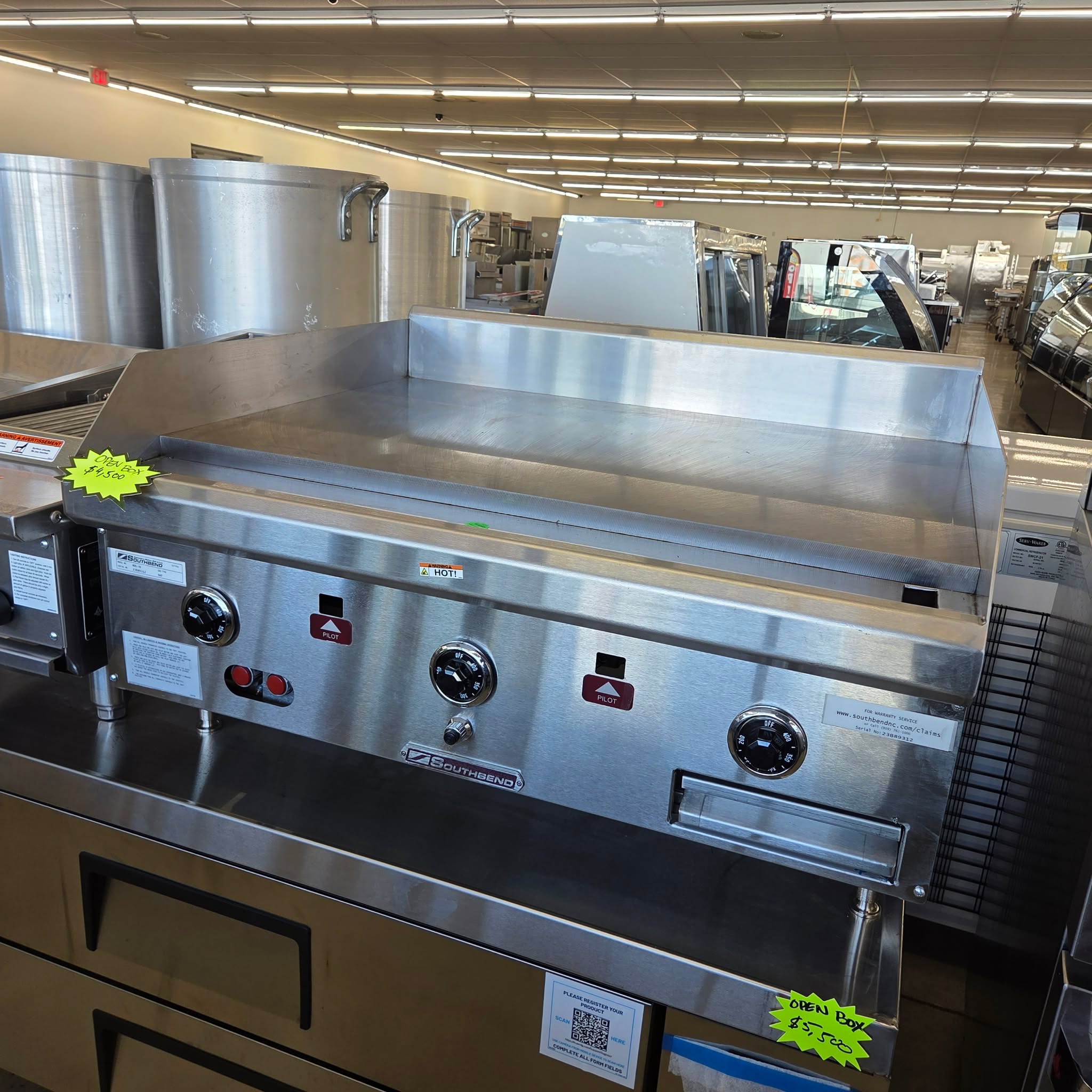
The clearest advantage is price. A refurbished unit typically costs less than the same model new, which frees budget for staffing, inventory or a larger order. Our current listings show how much room there can be. A Southbend HDG-36 36" Natural Gas Thermostatic Control Griddle is listed at $4,500.00, and the Turbo Air TCBE-48SDR-N 48" 2 Drawer Refrigerated Chef Base at $4,495.00 (both open-box units).
Performance is the second advantage. A properly refurbished unit should heat, cool and hold temperature as specified. Those are the features that keep a line running, and they are worth checking on any unit before you buy.
Cons and Risks: Hidden Issues, Limited Lifespan and Repair Costs
Refurbishment is a process, not a guarantee. The risks below are real, but they are not spread evenly across every equipment category. The smartest buyers rank risk by equipment type before they rank by price.
Hidden defects that surface after installation. A unit that passed a bench test can still fail under the load of a Friday dinner service.
Remaining lifespan is shorter than new. A refurbished unit has already logged years of service. The remaining life depends on the component with the shortest clock, not the cabinet. The compressor, control board, or door gaskets are often the parts that determine when the unit becomes a problem.
Parts availability and model age. A rare model with scarce parts can turn a repair into a lengthy downtime event. Before buying, confirm that the manufacturer still stocks the control board, igniter, thermostat, and door gaskets for that model. If a part is discontinued, the unit is effectively a parts donor waiting to happen.
Equipment-specific risk ranking. Risk is not uniform across categories:
- Refrigeration (reach-ins, chef bases, walk-ins): Highest risk. Compressors, condensers, and controls are expensive and failure is catastrophic to food safety. Age and prior runtime matter most here. A refurbished chef base can be a good buy only if the compressor age and service history are documented.
- Cooking equipment (griddles, ranges, fryers): Moderate risk. Most failures are wear items, thermostats, igniters, gas valves, fryer baskets, that are inexpensive and widely available. A refurbished griddle with a flat, uncracked plate and a tested thermostat is often a strong value.
- Holding and warming (heated cabinets, steam tables): Lower risk. Simple heating elements and mechanical controls are cheap to repair and rarely cause a full-line shutdown.
- Food prep (slicers, mixers, processors): Moderate to high risk. Motors and gearboxes are costly, and sanitation-sensitive surfaces must be fully cleanable. Verify that safety guards and interlocks are present and functional.
- Dishwashing: Moderate risk. Pumps, heating elements, and controls are the common failure points; confirm that the unit reaches proper wash and rinse temperatures before purchase.
Watch out: A unit with no documented service history and no warranty can leave you paying full repair costs on the first failure during a busy service.
Warranty gaps and exclusions. Many refurbished warranties exclude the compressor, labor, or shipping, which are often the largest costs. A "90-day parts only" warranty on a refrigeration unit is very different from a one-year parts-and-labor warranty. Read the exclusions before you compare prices.
Sanitation and code compliance. Refurbished equipment must still meet the sanitation and safety standards your local health department enforces. Cracked cutting surfaces, pitted food-contact areas, missing legs, or non-NSF components can fail an inspection even if the unit runs.
Refurbished vs. Used Restaurant Equipment: Where the Real Difference Lies
The real difference is accountability. Refurbished equipment has been restored to a stated working standard, and the seller usually stands behind it. Used equipment carries no such promise.
Price reflects this. Used gear is usually the cheapest option, refurbished sits in the middle, and new costs the most. The right choice depends on how much risk your kitchen can absorb. A backup unit might suit used equipment, while a primary line item usually justifies refurbished or new.
Used Restaurant Equipment With Warranty: What Coverage to Expect
Some sellers offer a limited warranty on used or refurbished equipment, and the terms vary widely. Read the coverage carefully. Ask whether it covers parts only or parts and labor, how long it lasts and whether it applies to the specific model. You can review a used Jade range with a chef base and griddle to see exactly what a warranty-backed listing includes.
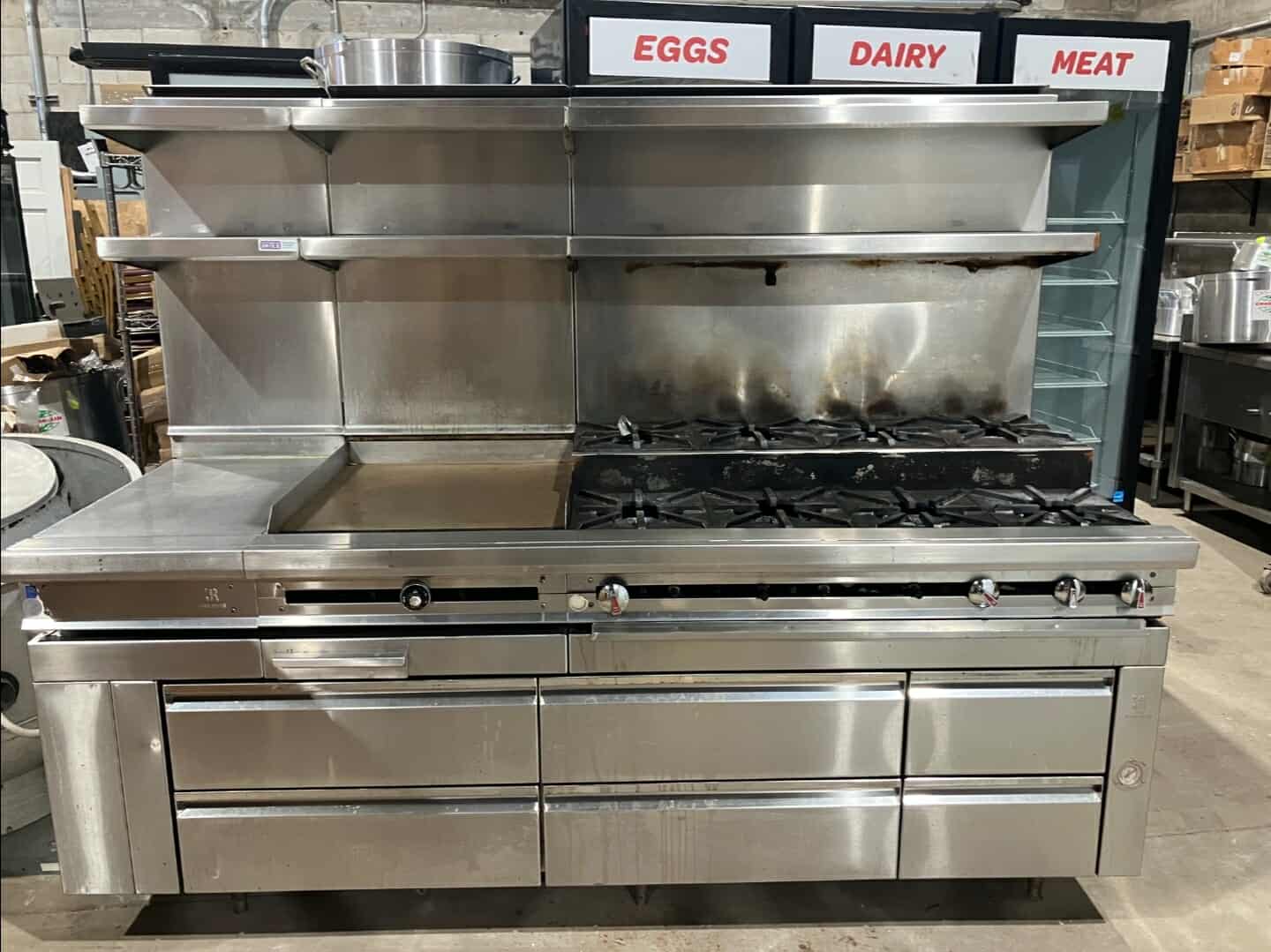
Manufacturer coverage on an open-box unit may differ from a dealer warranty, so confirm which applies before you buy.
Get the warranty in writing and keep the paperwork with your equipment records.
Restaurant Equipment Lifespan and Total Cost of Ownership Over Time
Total cost of ownership (TCO) adds energy, maintenance, repairs, downtime, and replacement, and it is the only fair way to compare a refurbished unit against a new one. Before you run the numbers, review how equipment financing payment terms work.
Build a five-year TCO estimate for each candidate. Use this structure:
- Purchase price, the quoted price plus delivery, installation, and any needed accessories.
- Energy use, estimate annual electricity or gas cost from the unit's nameplate rating and your local utility rate. A older refrigeration unit can draw meaningfully more power than a new high-efficiency model, and over five years that difference can narrow or erase the upfront savings.
- Preventive maintenance, cleaning, gasket replacement, calibration, and condenser coil cleaning. Refurbished units often need more frequent attention in the first year.
- Repair reserve, set aside an annual amount based on the unit's age and category. Refrigeration and cooking equipment carry higher reserves than holding cabinets.
- Downtime cost, estimate lost revenue per day if the unit fails during service, multiplied by the expected number of failure days per year. This is the line most buyers omit, and it is often the largest.
- Replacement timing, divide the purchase price by the expected remaining years of service to get an annualized capital cost.
A simple comparison method. For each candidate, add the annualized purchase price, annual energy, annual maintenance, annual repair reserve, and annual downtime cost. The lowest five-year total is the better financial choice, not the lowest sticker price.
Where refurbished usually wins on TCO. Simple cooking equipment with widely available wear parts, griddles, ranges, fryers, holding cabinets, tends to have a low repair reserve and short downtime, so the upfront savings carry through.
Where new equipment may win on TCO. Primary, high-volume lines where a failure stops service, and refrigeration where energy efficiency and food safety are both at stake. New equipment also typically carries a full manufacturer warranty, which lowers the first-year repair reserve.
Watch out: Comparing only the purchase price hides the two costs that most often flip the decision, energy use over five years and the revenue lost during a single busy-service failure. Write both numbers down before you choose.
Keep the estimate honest. Use the same utility rate, the same downtime assumption, and the same maintenance schedule for every candidate. If you do not have exact figures, use conservative ranges and note them. The goal is not a perfect forecast; it is a consistent comparison that keeps a low sticker price from masking a high ownership cost.
Restaurant Equipment Inspection Checklist Before You Buy
Before you commit, inspect the unit in person or request detailed photos and test records. Use this checklist:
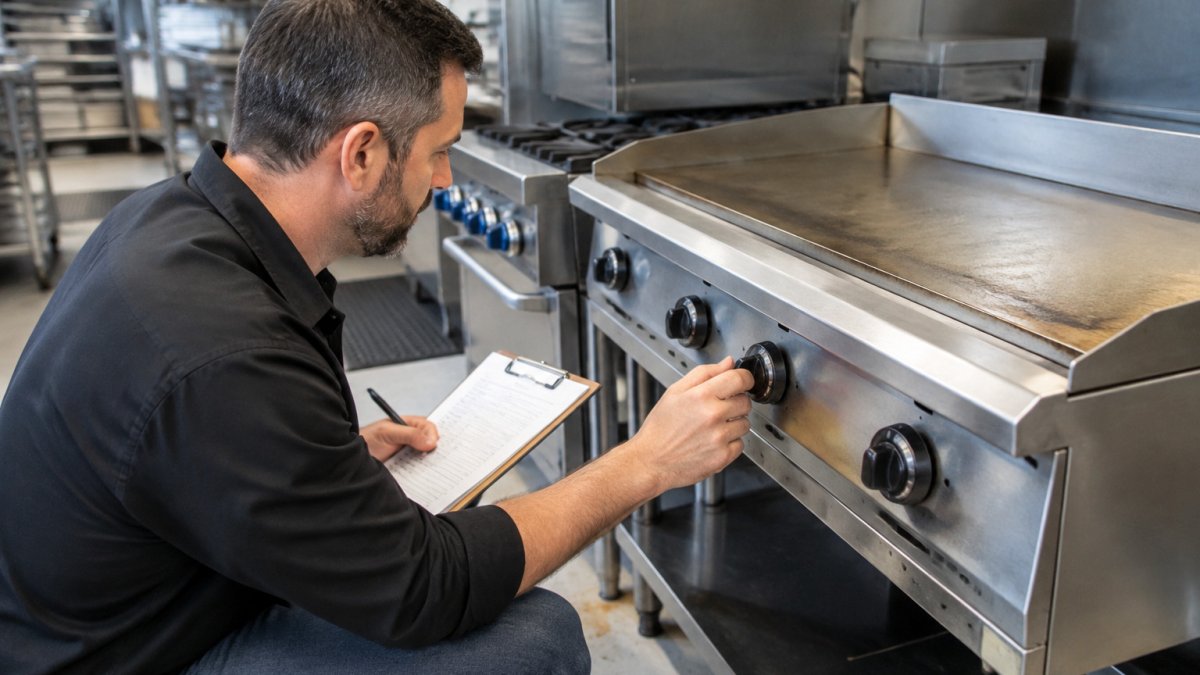
- Confirm the exact model number and that it matches the listing
- Check the power source: natural gas or propane, and voltage for electric units
- Inspect the griddle plate or chef base top for cracks, warping or heavy scoring
- Test every burner or refrigeration cycle and confirm temperature holds
- Check thermostat controls, pilot or spark ignition and safety valves
- Review grease drawers, door gaskets and drawer seals
- Ask for service history and any repair records
- Get the warranty terms, including parts-only or labor coverage, in writing
- Confirm delivery, installation and return terms before paying
Before committing, the article's checklist covers the key inspection points for any unit.
| Check | What to verify | Why it matters |
|---|---|---|
| Model number | Matches the listing | Confirms the unit you are buying |
| Griddle or chef base top | No cracks, warping or heavy scoring | Surface damage affects performance |
| Burners or refrigeration | Every cycle tested, temperature holds | Shows the unit works under test |
| Service history | Records provided | Reveals prior repairs |
| Warranty terms | Parts-only or labor, in writing | Defines what is covered |
| Delivery and returns | Confirmed before paying | Avoids surprise costs |
Choosing the Right Option for Your Kitchen Next Step
Pick new equipment for primary, high-use lines where downtime is expensive and warranty coverage matters most. When you are ready to act, read our guide to choosing and buying from a restaurant supply shop. Choose refurbished for dependable performance at a lower price, especially when the unit has been tested and carries a clear warranty. Consider used only for backup or low-stakes positions where you accept the risk.
If a refurbished unit fits your budget and kitchen, browse the Southbend HDG-36 36" Natural Gas Thermostatic Control Griddle at see the open-box griddle listing. Compare the warranty and test records alongside the price before you decide.
Frequently Asked Questions
What is the downside of buying refurbished restaurant equipment?
The main downside is uncertainty about hidden wear. Even a properly refurbished unit may have components nearing the end of their service life, such as compressors, burners or thermostats, which can fail sooner than on new equipment. Repair parts may also take longer to source for older models. Buyers can reduce this risk by requesting service history, testing the unit under load before purchase, and confirming the warranty terms in writing before paying.
Does refurbished restaurant equipment come with a warranty?
Coverage varies by seller and by unit. Some refurbished or open-box units carry a limited parts-and-labor warranty, while others are sold as-is. Always ask whether the warranty transfers, what it excludes, and how repairs are handled, so you know your protection before you buy used restaurant equipment with warranty terms.
How much can you save by buying refurbished restaurant equipment?
Savings depend on the item and its condition, but refurbished or open-box units are typically priced below new models. Our Southbend HDG-36 36-inch natural gas griddle is listed at $4,500.00, and the Turbo Air TCBE-48SDR-N 48-inch two-drawer refrigerated chef base is listed at $4,495.00. Compare these prices against the cost of a new unit, then factor in expected repairs and lifespan to calculate the real savings over the equipment's working life.
What should you check before buying refurbished commercial kitchen equipment?
Start with a physical inspection: check welds, panels, drawers, casters and gas connections for damage or leaks. Test every function at operating temperature, including thermostats, pilot ignition and safety valves. Review service history, confirm parts availability for the model, and verify electrical or gas ratings match your kitchen. Document each check with photos and written notes so you have a record if a dispute arises after delivery.
